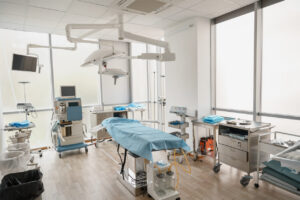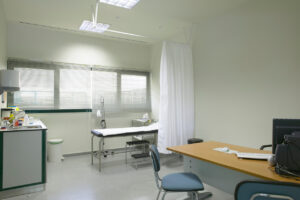

A radiology room must meet safety regulations in order to protect both staff and patients. And whether you are designing a new radiology room from scratch or making upgrades to an existing suite, ensuring medical imaging compliance should be at the forefront of your mind.
From radiation shielding to equipment integration and power needs, achieving a good patient flow to obtaining state-specific licensing, there are a lot of elements to consider during your design phase. Here’s everything you need to know.
Radiation Shielding: Non-Negotiable Requirements
Adequate shielding is essential for ensuring safety and compliance in the radiation room. The requirements for shielding are dependent on the radiation type and energy levels so it’s important to create a design that’s tailored to the room itself. The control console area is designated for the radiographer to control and monitor the procedure from a safe distance.
The thickness and the material of the radiation shielding are non-negotiable requirements. The screen should be no less than 1.5mm for general X-rays, no less than 2mm for CT scans and no less than 1mm for dental X-rays. If the control area is no further than 2m away from the X-ray machine, the screen should be thicker.
When it comes to the walls, doors and windows, there are strict requirements too, depending on the function of the space. Doors should have a lead lining, and windows should be made using lead glass or lead acrylic. If the space is not on the ground floor, the design should consider the thickness of the floor and the ceiling to ensure adequate protection.
Equipment Integration and Power Needs
Equipment integration and power needs are critical considerations during the design and construction of a medical imaging room. These require a stable and uninterrupted power connection and, if you are designing a new space rather than upgrading an existing radiology room, specialist cabling will also likely be needed.
When considering the ergonomics of the space, you should consider the size of the equipment and its proximity to the control console area. If the equipment is integrated within 2m of the console area, thicker protection will be required. Special attention should also be given to rooms that contain radiology equipment that is mounted from floor to ceiling. In some cases, additional structural support will be needed ahead of the equipment integration. Addressing this during the design phase will prevent costly and time-consuming fixes during the construction phase.
Patient Flow in Imaging Suites
During your design, achieving a good patient flow in imaging suites is critical. The medical imaging unit should have a clear one-way flow of patients, with imaging areas arranged into zones depending on the type of imaging conducted. A smooth flow to consider implementing goes from entry to holding and then imaging to recovery. This ensures that patients move swiftly and safely through the space without risking contamination.
State-Specific Licensing and Approval Considerations
During the design phase, it’s essential to ensure that you are compliant with both state-specific and national licensing requirements. From the design standards to the radiation safety, compliance with the Diagnostic Imaging Accreditation Scheme to state-specific regulations, there are many factors to consider.
Ensure that your design is compliant with medical imaging standards by getting in touch with the experts at Consilo. With a wealth of knowledge and experience, our team are here to help with the design and construction phases of your medical, dental and physio fitout to achieve both state-specific and national standards. Get started today by booking a call with our team.